Why Fashion Collectors Are Treating Clothes Like Living Archives
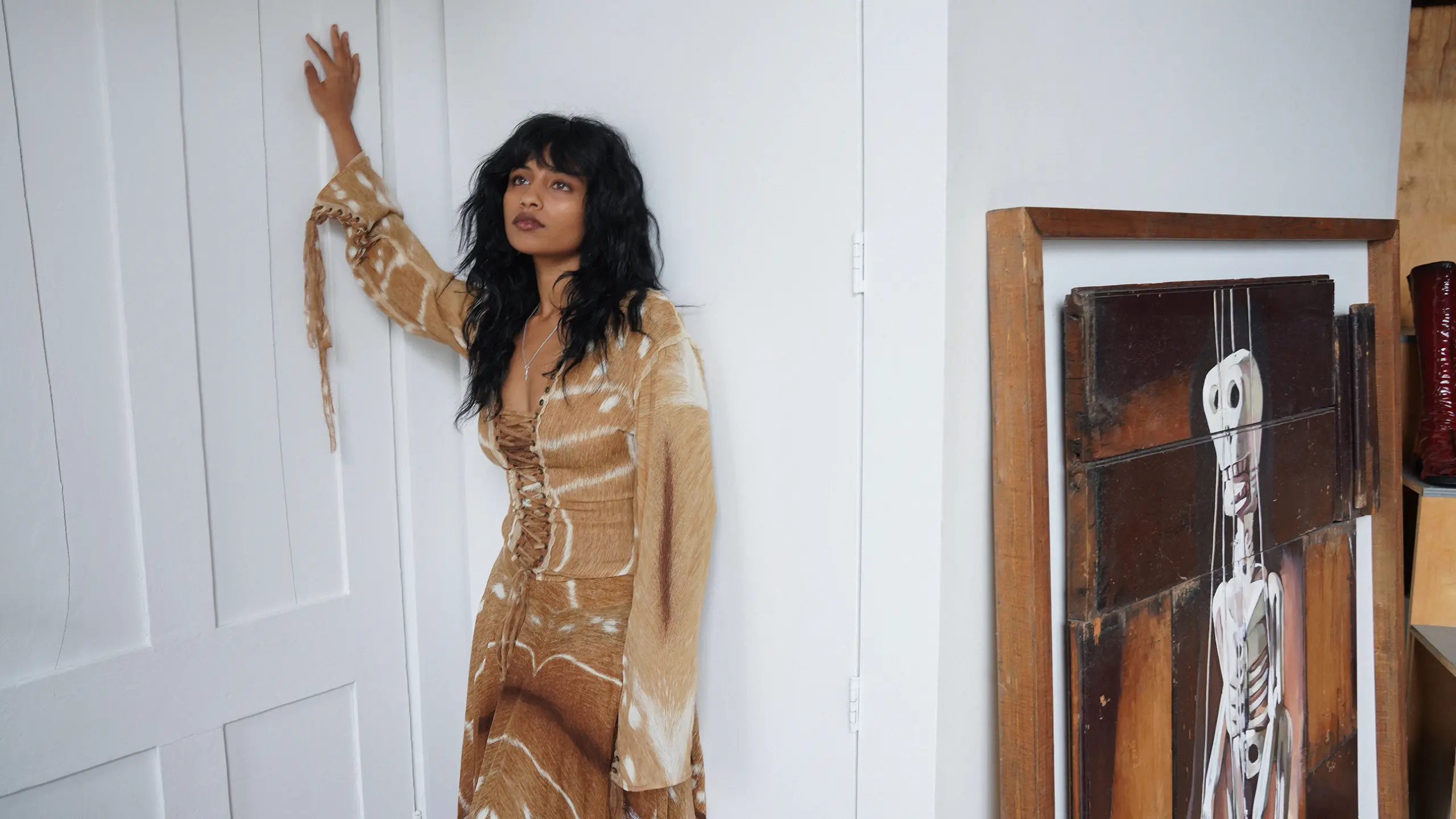
Few people embody that shift better than New York–based photographer and content creator Tanya Ravichandran, whose wardrobe includes hundreds of pieces by Alexander McQueen and Ann Demeulemeester. Her collection is highly focused, deeply researched and, crucially, meant to be worn rather than hidden away.
That idea feels increasingly relevant.
As fashion moves faster and trend cycles become shorter, collectors are looking backwards—not necessarily out of nostalgia, but because older collections often contain a level of authorship, experimentation and storytelling that feels difficult to reproduce.
Collecting With a Point of View
Ravichandran has been collecting for around a decade, but in recent years her approach has become far more specific.
Instead of buying broadly, she focuses heavily on McQueen and Demeulemeester, building a wardrobe of more than 400 McQueen pieces and over 200 by Demeulemeester.
That level of focus is what turns shopping into collecting.
A strong collection does not necessarily need to be enormous. It needs a perspective.
The same principle applies whether someone is collecting fashion, furniture, ceramics or art: the most interesting collections usually reveal something about the person assembling them.
McQueen and the Power of Storytelling
For Ravichandran, part of the attraction to Alexander McQueen comes from the way his collections created complete worlds.
McQueen's runway shows were rarely just presentations of clothes. They were narratives populated by characters, references and emotions.
That theatricality allows individual garments to retain meaning decades after they were first shown.
A jacket or corset is no longer simply an object. It becomes part of a larger story.
Ravichandran owns pieces from some of McQueen's best-known periods, including a leather jacket from spring 2003 and a corset connected to his fall 2002 collection.
What makes these pieces compelling today is not simply rarity.
They carry evidence of a designer's thinking.
Ann Demeulemeester and Clothes That Become Personal
Ravichandran's relationship with Ann Demeulemeester is different.
Rather than being drawn primarily to spectacle, she speaks about how the clothes make her feel when she wears them.
That distinction matters.
The most enduring fashion often leaves enough room for the wearer to participate. It has a recognisable identity without overwhelming the person inside it.
Demeulemeester's work—often built around black and white, fluid tailoring, layering and unconventional proportions—has always operated in that space.
Ravichandran's archive even includes a vest from Demeulemeester's first solo runway collection in 1991, constructed from silver dog tags and unusually simple materials.
It is exactly the kind of object that demonstrates why archive fashion is becoming so fascinating: material experimentation, cultural context and personal style exist in the same piece.
Knowledge Is More Valuable Than Hype
One of the most interesting things about serious collectors is how much time they spend learning.
Ravichandran's approach involves studying collections, recognising silhouettes and understanding the history behind individual garments. She argues that deep knowledge can allow someone to identify an important piece even from a poor online listing.
That is increasingly important in a resale market where the obvious pieces are quickly discovered and priced accordingly.
The best finds often require context.
Knowing who designed something, when it was made, why it mattered and how it relates to a broader body of work can transform an obscure secondhand listing into something significant.
Collecting becomes less about chasing logos and more about developing an eye.
The Hunt Is Part of the Experience
For many collectors, finding the piece becomes almost as meaningful as owning it.
Ravichandran searches across resale platforms constantly, using technology alongside an extensive network of other vintage collectors.
This introduces an element that conventional retail rarely provides: uncertainty.
You may know exactly what you want without knowing when—or whether—you will ever find it.
That waiting changes the relationship with the object.
When something finally appears after months or years of searching, it arrives with a story before it has even been worn.
Fashion Archives Should Be Seen
Perhaps the strongest idea behind Ravichandran's collection is that important clothes should not disappear into private storage.
She has exhibited parts of her archive publicly and produced a print publication around the collection. Her view is that preserving fashion should also involve allowing people to experience it.
There is an important difference between preservation and isolation.
Clothing was designed to move around bodies. Chairs were designed to be sat in. Ceramics were designed to be handled.
Objects can be culturally important without becoming untouchable.
In many cases, continued use is part of what keeps their meaning alive.
Why Archive Fashion Matters Now
The renewed interest in vintage designer fashion is partly a reaction to how disposable contemporary culture can feel.
When everything is immediately available, endlessly reproduced and rapidly replaced, objects with history become more compelling.
A garment from a particular runway collection carries a specific moment with it.
It reflects the designer, the period, the materials available and the cultural ideas surrounding its creation.
That makes it fundamentally different from something designed primarily around a current trend.
Buy Less, Know More
There is a broader lesson in this way of collecting.
Instead of constantly adding more, focus.
Learn the designers whose work genuinely interests you. Understand their important periods. Look at construction, material and context rather than simply labels or resale value.
Then wait for the right object.
The future of collecting may look surprisingly similar to its past: fewer things, deeper knowledge and stronger emotional connections to what we choose to keep.
For Himassa, that philosophy extends beyond fashion.
The most interesting objects are rarely interesting because they are new.
They are interesting because somebody had a distinct idea—and made something worth holding onto.